
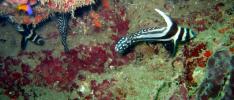
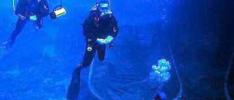
Bioprospecting for marine compounds along Panama’s coasts is currently underway to develop new alternative medications. Panama’s location on both the Atlantic and Pacific Ocean makes the country a hotspot for unique marine chemicals that could be used to treat neglected diseases such as cancer.
The Panama International Cooperative Biodiversity Group (Panama ICBG) is a program funded by the U.S. government through the National Institute of Health and the National Science Foundation. The program began in 1998, by Professor Phyllis Coley and her husband. In a telephone interview, Coley told WaterWideWeb, “We saw that there should be a link between drug discovery in nature and conserving nature.”
Since then, the program has evolved from a focus on terrestrial plants to a comprehensive laboratory that includes testing compounds found in marine environments. “Philosophically, nations with high biodiversity need to see some benefit to programs that are working to conserve their environments. We had to come up with a model where host countries would get immediate benefit which would motivate them to protect endangered areas,” continued Coley.
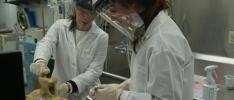
The Panama ICBG program is structured to include local Panamanians in the drug discovery process. Training and technology transfer is a major facet of the program.
Marcy Balunas, assistant professor of medical chemistry at the University of Connecticut, worked in Panama for three years collecting and testing compounds found in marine bacteria. Balunas told WaterWideWeb, “If we lose biodiversity in marine environments, we could lose capacity to find new drugs.”
The work of Panama ICBG and other programs like it, are ensuring that humankind lives in relative harmony with nature in multiple capacities. “There are drugs out there from the ocean already. The goal is to find new medicines to treat diseases that either aren’t well studied or that don’t have good treatment options,” explained Balunas.
So far, the Panama ICBG has identified a chemical compound named Coibamide, named after the island of Coiba in Panama. The team discovered that coibamide is incredibly active against cancer. Follow up studies on coibamide are revealing exactly how coibamide is active against cancer. “Coibamide kills a subset of cancer cells. It works in a whole new way that could lead to innovative means of drug discovery,” Coley noted.
Chemical compounds that are effective against cholera in a test tube are also being reviewed members of the Panama ICBG team, at different marine testing locations. The process of finding a new drug takes between ten to fifteen years. The same process for finding natural drugs takes even longer. But in the case of coibamide and other compounds that could treat diseases like malaria and leichmaniasis, an effective treatment is well worth the wait.
Immediate and long term benefits to Panama are seen on the economic, infrastructural and environmental level due to the framework of the Panama ICBG program. Scientists on the project are investing in capacity building, and Panama can now boast of its drug discovery program that is internationally recognized. Fortuitously, efforts to preserve nature are in effect promoting development through skills building, providing jobs, and advancing Panama’s environmental and scientific agenda.
Conserving the biodiversity of this area offers unforeseen benefits to the world of alternative medicication and marine science. Humanity cannot afford to allow oceans and marine environments to be compromised. New drugs that could potentially save lives are at risk of being unstudied and undiscovered.
In Panama and around the world, the dual pursuit toward environmental sustainability and protecting human health can coexist. These two crucial issues ensure a healthy and sustainable future for humankind. Protecting the world’s oceans and coastal environments simply can’t be disregarded by local governments or the international community. There is too much to be found in the marine life of the sea.
The photo above was provided by Professor Marcy Balunas and Kim Diver.
If you enjoyed this article, you should also read:
China’s Drought Costing Billions






Your Comments
2 Comments so far